- Table of Contents
- Key Takeaways
- What Is Autonomous AI?
- The Evolution from Reactive to Autonomous
- How Does Autonomous AI Work?
- Core Technologies Behind Autonomous AI
- The Decision-Making Process
- Key Differences from Traditional AI
- Real-World Applications Today
- Autonomous Vehicles
- AI Agents for Business Processes
- Robotics
- Recommendation Systems
- Trading and Finance
- Benefits and Challenges
- The Benefits
- The Challenges
- The Future of Autonomous AI
- Near-Term (1-3 years)
- Medium-Term (3-10 years)
- Long-Term (10+ years)
- Key Areas of Development
- Frequently Asked Questions
- Q: Is autonomous AI the same as artificial general intelligence (AGI)?
- Q: Will autonomous AI take all our jobs?
- Q: Can autonomous AI systems make ethical decisions?
“`html
The Rise of Autonomous AI: A Beginner’s Breakdown
Artificial intelligence has evolved dramatically over the past decade, and one of the most exciting developments is the rise of autonomous AI systems. Unlike traditional AI that requires constant human input and direction, autonomous AI agents can make decisions, take actions, and solve problems with minimal human intervention. If you’re curious about what this technology means and how it’s changing the world, you’ve come to the right place.
In this comprehensive guide, we’ll explore what autonomous AI actually is, how it works, why it matters, and what the future might hold. Whether you’re a tech enthusiast, a business professional, or simply someone interested in understanding the technology shaping our future, this breakdown will help you grasp the fundamentals of autonomous AI.
Table of Contents
Key Takeaways
- Autonomous AI operates independently to make decisions and complete tasks without constant human oversight
- It combines multiple technologies including machine learning, natural language processing, and decision-making algorithms
- Current applications range from autonomous vehicles to AI agents that manage business processes
- Benefits include increased efficiency and 24/7 operation, but challenges around safety and control remain
- The technology is rapidly advancing and will likely transform multiple industries within the next 5-10 years
What Is Autonomous AI?
Autonomous AI refers to artificial intelligence systems that can operate independently, making decisions and taking actions based on their programming and learned experiences, without requiring human direction for each individual task. Think of it as an AI that doesn’t need someone standing over it, telling it exactly what to do every step of the way.
The word “autonomous” literally means “self-governing,” and that’s exactly what these systems do. They observe their environment, analyze information, make decisions, and execute actions all on their own. This represents a significant leap forward from earlier AI systems that were primarily reactive tools designed to respond to specific inputs with predetermined outputs.
The Evolution from Reactive to Autonomous
Traditional AI systems operated in a simple pattern: input → process → output. You give the system information, it processes it according to its rules, and it gives you an answer. But autonomous AI systems are fundamentally different. They can:
- Set their own goals and sub-goals
- Learn from past experiences and adjust their approach
- Operate continuously without pausing for human approval
- Adapt to new situations not explicitly programmed into them
- Take initiative when they identify opportunities or problems
This shift from reactive to proactive, goal-oriented behavior is what makes autonomous AI such a game-changer.
How Does Autonomous AI Work?
Understanding how autonomous AI actually functions requires looking at the various components and technologies that work together. It’s not just one breakthrough—it’s a combination of several advanced techniques working in concert.
Core Technologies Behind Autonomous AI
Machine Learning and Neural Networks form the foundation. These allow the AI system to learn patterns from data and improve its performance over time without being explicitly programmed for every scenario. The system essentially teaches itself through exposure to examples and feedback.
Natural Language Processing (NLP) enables autonomous AI to understand and generate human language, allowing it to communicate with humans and interpret complex instructions that might be written in natural language rather than strict programming code.
Decision-Making Algorithms help the AI evaluate options and choose the best course of action. These might include reinforcement learning (learning through trial and error with rewards and penalties) or planning algorithms that map out sequences of actions to achieve goals.
Perception and Sensing allow the AI to gather information about its environment. For a robot, this might be cameras and sensors. For a software agent, this might be access to data systems and APIs. The AI needs to understand what’s happening around it to make good decisions.
The Decision-Making Process
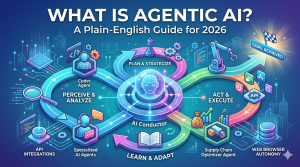
When an autonomous AI system encounters a situation, here’s roughly what happens:
- Perception: The system observes its current state and environment
- Analysis: It analyzes the information against its learned models and objectives
- Planning: It creates a plan of action to achieve its goals
- Execution: It takes action based on its plan
- Feedback: It monitors the results and learns from the outcome
- Adjustment: It refines its approach for future similar situations
This cycle repeats continuously, allowing the system to become increasingly effective at its task over time.
Key Differences from Traditional AI
To really understand what makes autonomous AI special, it’s helpful to compare it directly with traditional AI systems.
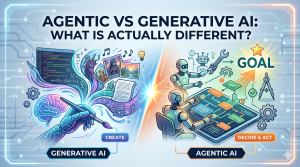
| Feature | Traditional AI | Autonomous AI |
|---|---|---|
| Operation Mode | Reactive, task-specific | Proactive, goal-oriented |
| Human Involvement | Requires human input for each task | Operates independently |
| Learning | Limited; mostly static after deployment | Continuous learning and adaptation |
| Flexibility | Struggles with new situations | Adapts to novel scenarios |
| 24/7 Operation | Possible but often limited | Can operate continuously |
The fundamental difference is this: traditional AI is a tool you use, while autonomous AI is more like an agent you employ. You provide a traditional AI with input and get output. You provide autonomous AI with goals and let it figure out how to achieve them.
Real-World Applications Today
Autonomous AI isn’t just theoretical—it’s already being deployed in real-world scenarios across multiple industries.
Autonomous Vehicles
Self-driving cars are perhaps the most visible example of autonomous AI. These vehicles must constantly perceive their environment, make split-second decisions, and navigate from point A to point B without human intervention. Companies like Tesla, Waymo, and traditional automakers are investing heavily in this technology.
AI Agents for Business Processes
Organizations are increasingly using AI agents to automate complex business workflows. These autonomous agents can process documents, manage customer support tickets, schedule meetings, and even handle basic financial transactions—all without human intervention for routine cases.
Robotics
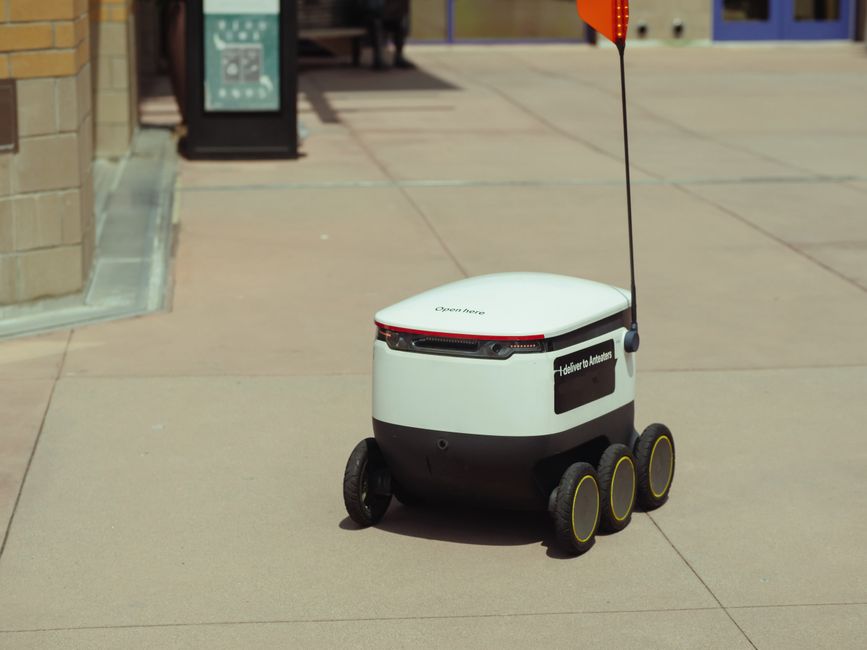
Autonomous robots are being deployed in manufacturing, warehouses, and even homes. These robots can navigate spaces, pick up objects, and complete tasks while adapting to unexpected changes in their environment.
Recommendation Systems
Recommendation algorithms on Netflix, Amazon, and Spotify are autonomous in the sense that they independently make decisions about what content to show each user, learning from behavior patterns and constantly optimizing for engagement.
Trading and Finance
Autonomous trading systems make investment decisions independently, executing trades based on market conditions and learned patterns. While humans set the initial parameters and risk limits, the AI system operates autonomously within those bounds.
Benefits and Challenges
The Benefits
Autonomous AI offers several compelling advantages:
- Increased Efficiency: Systems can work 24/7 without fatigue, completing tasks faster than humans
- Cost Reduction: Automation reduces labor costs and increases productivity per resource
- Consistency: Autonomous systems perform tasks the same way every time, reducing variability and errors
- Scalability: Once built, an autonomous AI system can handle growing workloads with minimal additional cost
- Human Focus: Freeing humans from routine tasks allows them to focus on creative and strategic work
- Complex Problem Solving: Autonomous AI can tackle problems that are too complex or risky for humans
The Challenges
However, significant challenges remain:
- Safety and Control: How do we ensure autonomous AI systems don’t cause harm or make dangerous decisions?
- Accountability: If an autonomous system makes a mistake, who is responsible?
- Transparency: It’s often hard to understand exactly why an autonomous AI made a particular decision (the “black box” problem)
- Bias: If the system learns from biased data, it will perpetuate and potentially amplify those biases
- Job Displacement: Widespread automation could displace workers, creating economic and social challenges
- Ethical Concerns: There are many open questions about the ethics of autonomous systems making decisions that affect human lives
These aren’t insurmountable problems, but they require careful thought, regulation, and technical innovation to address properly.
The Future of Autonomous AI
The trajectory of autonomous AI development suggests we’re heading toward increasingly sophisticated and capable systems. Here’s what experts predict:
Near-Term (1-3 years)
We’ll likely see more specialized autonomous AI agents deployed in specific industries. These won’t be general-purpose AI systems, but rather highly optimized tools for particular tasks like customer service, content moderation, or supply chain management. Autonomous vehicles will continue expanding to more cities and conditions.
Medium-Term (3-10 years)
The systems will become more sophisticated and integrated. Multi-agent systems where several autonomous AI agents collaborate to achieve complex goals will become more common. Regulations will develop to address safety and accountability concerns. Most industries will have some form of autonomous AI handling significant portions of their routine work.
Long-Term (10+ years)
This is where things get speculative, but the trajectory suggests we may see artificial general intelligence (AGI)—AI systems that can handle any intellectual task a human can. This would represent a fundamental shift in how society and economy function. The implications are profound and worth thinking about seriously.
Key Areas of Development
Several areas will be crucial for advancement:
- Explainability: Making AI decisions more transparent and understandable to humans
- Safety and Alignment: Ensuring autonomous systems behave in ways aligned with human values
- Transfer Learning: Enabling systems to apply knowledge from one domain to new domains more effectively
- Energy Efficiency: Making these systems less computationally expensive to run
- Regulation and Standards: Developing appropriate governance frameworks
Frequently Asked Questions
Q: Is autonomous AI the same as artificial general intelligence (AGI)?
A: Not quite. Autonomous AI refers to systems that can operate independently and make decisions without constant human input, but they’re typically specialized for specific tasks or domains. Artificial general intelligence would be a system that can understand, learn, and apply knowledge across any domain—more like a generally intelligent human. Today’s autonomous AI systems are narrow, while AGI would be general-purpose. Most experts believe we’re still years or decades away from AGI.
Q: Will autonomous AI take all our jobs?
A: This is a legitimate concern, but the answer is more nuanced than a simple yes or no. Throughout history, automation has displaced workers in some sectors while creating new jobs in others. What’s different this time is the speed and breadth of change. Some jobs will certainly be automated away, but new types of work will likely emerge. The real challenge will be managing the transition for workers whose skills become obsolete and ensuring that the benefits of automation are shared broadly across society, not concentrated with a small number of companies or individuals.
Q: Can autonomous AI systems make ethical decisions?
A: This is one of the hardest questions in AI ethics. Autonomous systems can be programmed with ethical guidelines and trained on datasets that reflect ethical principles, but there’s a difference between following rules and truly understanding ethics the way humans do. More fundamentally, ethics is context-dependent and value-dependent. Different cultures and individuals have different ethical frameworks. The challenge is: whose ethics should we program into these systems? This is why many experts believe humans need to remain involved in decisions with major ethical implications, rather than leaving them entirely to autonomous AI systems.