- Table of Contents
- Key Takeaways
- Why Trade Commodities Without Physical Ownership?
- Futures Contracts: The Most Popular Method
- What Are Commodity Futures?
- How Futures Margin Works
- Popular Commodity Futures
- Commodity ETFs and Mutual Funds
- Exchange-Traded Funds (ETFs)
- Commodity Mutual Funds
- Contracts for Difference (CFDs)
- Understanding CFDs
- Leverage and Risks
- Commodity Options Trading
- Call and Put Options
- Options Strategies
- Investing in Commodity-Related Stocks
- Comparison of Trading Methods
- Risks and Considerations
- Leverage Risk
- Volatility and Slippage
- Contango and Backwardation
- Opportunity Costs and Capital Allocation
- Tax Implications
- Frequently Asked Questions
- What's the minimum amount needed to start trading commodities?
- How are commodity trading profits taxed?
- Can I trade commodities with a small account?
- What's the difference between trading commodities and investing in them?
Disclaimer: This article is for educational purposes only and should not be considered financial advice. Commodity trading involves significant risk, including the potential loss of principal. Past performance does not guarantee future results. Always conduct thorough research and consult with a qualified financial advisor before making any investment decisions. The examples and figures presented are illustrative and not guaranteed outcomes.
How to Trade Commodities Without Owning the Physical Product
Table of Contents
- Key Takeaways
- Why Trade Commodities Without Physical Ownership?
- Futures Contracts: The Most Popular Method
- Commodity ETFs and Mutual Funds
- Contracts for Difference (CFDs)
- Commodity Options Trading
- Commodity Company Stocks
- Comparison of Methods
- Risks and Considerations
- Frequently Asked Questions
- Author Bio
Key Takeaways
- Futures contracts are the most liquid and transparent way to trade commodities, requiring only margin deposits rather than full commodity purchase
- ETFs and mutual funds offer beginner-friendly exposure with lower capital requirements and built-in diversification
- CFDs allow leverage trading with no expiration dates, but carry higher counterparty risk than exchange-traded instruments
- Options provide defined-risk strategies for hedging or speculation on price direction and volatility
- Leverage amplifies both profits and losses, making risk management essential in commodity trading
- Each method has different tax implications, margin requirements, and regulatory oversight—choose based on your experience level and goals
Why Trade Commodities Without Physical Ownership?
Trading commodities without owning the physical product offers several compelling advantages over purchasing and storing actual barrels of oil, bushels of wheat, or bars of gold. For most retail traders and investors, the practical and financial barriers to physical ownership make derivatives-based trading the only viable option.
Storage and logistics costs for physical commodities can quickly become prohibitive. Storing crude oil requires specialized facilities with environmental compliance. Precious metals demand secure vaults. Agricultural products need climate-controlled warehouses. These operational expenses can easily eliminate any profit margin from price appreciation.
Capital efficiency is another major advantage. With futures contracts, you might control $100,000 worth of gold with just $5,000 in margin capital. This allows traders to allocate resources across multiple positions rather than tying up their entire portfolio in a single commodity purchase.
Liquidity and flexibility are superior in derivative markets. You can enter and exit positions within seconds during trading hours, whereas selling physical commodities might take days or weeks. This flexibility is crucial for managing risk and capitalizing on price opportunities.
Tax simplicity varies by method, but many commodity derivatives receive favorable tax treatment in some jurisdictions, such as the 60/40 long-term capital gains treatment available for certain futures contracts in the United States.
Futures Contracts: The Most Popular Method
What Are Commodity Futures?
Futures contracts are standardized agreements to buy or sell a specific quantity of a commodity at a predetermined price on a specified future date. These contracts trade on regulated exchanges like the Chicago Mercantile Exchange (CME), NYMEX (New York Mercantile Exchange), and ICE (Intercontinental Exchange).
For example, a crude oil futures contract (WTI) represents 1,000 barrels of oil. Rather than actually delivering or receiving 1,000 barrels, most traders close their positions before the contract expiration date. If you buy one crude oil futures contract at $75 per barrel and sell it at $78 per barrel, you profit $3,000 (the $3 difference × 1,000 barrels) without ever handling a single drop of oil.
How Futures Margin Works
Futures trading requires posting margin—a good-faith deposit that represents a fraction of the contract’s total value. As of recent market conditions, trading one crude oil futures contract might require initial margin of approximately $4,000 to $6,000, though this varies based on volatility and exchange requirements.
When the market moves against your position, you may receive a margin call requiring you to deposit additional funds. Conversely, profitable positions add to your margin balance. This daily settlement process is called “marking to market” and provides transparency about your real-time profit or loss.
Popular Commodity Futures
The most actively traded commodity futures include:
- Energy: Crude oil (WTI, Brent), natural gas, heating oil
- Metals: Gold, silver, copper, platinum
- Agriculture: Corn, wheat, soybeans, coffee, sugar
- Soft commodities: Cocoa, cotton, orange juice
Gold futures, for instance, involve contracts of 100 troy ounces. A trader expecting gold prices to rise might buy one gold futures contract. If gold appreciates from $1,950 to $1,975 per ounce, the profit would be $2,500 (25 × 100 ounces).
Commodity ETFs and Mutual Funds
Exchange-Traded Funds (ETFs)
ETFs provide a more accessible entry point for retail investors unfamiliar with futures trading. A commodity ETF holds either physical commodities, futures contracts, or stocks of companies involved in commodity production, depending on its specific strategy.
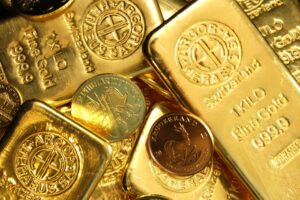
Physically-backed ETFs actually hold the commodity in storage. For example, the SPDR Gold Trust (GLD) holds physical gold bars in secure vaults. When you buy shares of GLD, you own a fractional claim on those gold holdings. This approach offers transparency and security, though storage fees reduce returns (typically 0.40% annually for GLD).
Futures-based ETFs hold commodity futures contracts instead of physical commodities. These are often more tax-efficient in certain situations but require the fund manager to “roll” expiring contracts, which can create tracking error versus spot prices during contango or backwardation market conditions.
ETFs trade like stocks on exchanges, meaning you can buy and sell them during market hours at transparent prices. An investor needing quick access and simplicity might purchase shares of the iShares Commodities Select Strategy ETF (COMT) rather than opening a futures trading account.
Commodity Mutual Funds
Actively managed mutual funds offer professional management and diversification across multiple commodities. However, they typically charge higher expense ratios (1.0% to 2.5% annually) compared to passive ETFs (0.3% to 0.6%), which can significantly impact long-term returns.
Contracts for Difference (CFDs)
Understanding CFDs
A Contract for Difference is an agreement between you and a CFD broker to exchange the difference in the price of a commodity between the opening and closing of the contract. CFDs allow you to profit from price movements without owning the underlying asset, similar to futures, but with important structural differences.
If you believe gold will rise, you might open a long CFD position on gold at $1,950 per ounce. If gold rises to $1,970, you close the position and receive $20 per ounce in profit. If gold falls to $1,930, your loss would be $20 per ounce.
Leverage and Risks
CFDs typically offer higher leverage than futures—sometimes 20:1 or even 50:1 on commodities—meaning you can control large positions with minimal capital. This amplifies both potential profits and losses dramatically. A 5% adverse price movement with 20:1 leverage results in a 100% loss of your margin capital.
A significant disadvantage is counterparty risk. CFDs trade over-the-counter directly with brokers rather than on regulated exchanges. If a CFD broker becomes insolvent, your positions could be at risk. Additionally, some jurisdictions have stricter regulations or warnings about CFD trading due to the high percentage of retail accounts losing money.
Commodity Options Trading
Call and Put Options
Options provide the right, but not the obligation, to buy or sell a commodity at a specified price (the strike price) by an expiration date. This structure creates defined-risk trading scenarios impossible with futures.
Call options allow you to profit from price increases with limited downside. For instance, buying a gold call option with a $2,000 strike price costs you a premium (let’s say $50 per ounce, or $5,000 total for a 100-ounce contract). If gold rises to $2,100, you exercise the option and profit $10,000 minus the $5,000 premium you paid. If gold falls below $2,000, your maximum loss is the $5,000 premium paid—you simply let the option expire worthless.
Put options work inversely, profiting from price declines. A farmer expecting lower wheat prices might buy puts to protect against downside risk, essentially purchasing insurance against price drops.
Options Strategies
Beyond simple calls and puts, traders can construct sophisticated strategies:
- Spreads: Buy one option and sell another simultaneously to reduce cost and define maximum loss
- Straddles: Buy both a call and put at the same strike price to profit from large price movements in either direction
- Collars: Buy protective puts while selling calls to finance the cost—commonly used by producers to hedge price risk
Options require careful understanding of implied volatility, theta decay, and Greeks (delta, gamma, vega, rho)—the mathematical sensitivities that determine option pricing and behavior as conditions change.
Investing in Commodity-Related Stocks
An indirect approach to commodity exposure involves purchasing stock in companies involved in commodity extraction, refining, or distribution. Mining companies, oil producers, and agricultural conglomerates offer commodity exposure combined with dividend potential and potentially better risk-adjusted returns.
For example, a gold mining company’s stock price depends on gold prices but is also influenced by operational efficiency, reserve depletion, management quality, and capital expenditure. During periods when gold prices rise, mining stocks often outperform the underlying commodity due to operating leverage—the same fixed costs produce higher profits.
However, individual stock risk (company-specific events, management changes, regulatory issues) adds a layer of complexity beyond pure commodity price exposure. Diversified commodity stock ETFs can mitigate this concern.
Comparison of Trading Methods
| Method | Minimum Capital | Leverage | Liquidity | Complexity | Regulatory Oversight |
|---|---|---|---|---|---|
| Futures | $5,000-$10,000 | 10-50x typical | Very High | Medium-High | Excellent (Exchange regulated) |
| ETFs | $100-$500 | 1x (no leverage) | Very High | Low | Excellent (SEC regulated) |
| CFDs | $500-$2,000 | 20-50x typical | High | Medium | Variable by jurisdiction |
| Options | $2,000-$5,000 | Variable | High (liquid contracts) | High | Good (Exchange regulated) |
| Stocks | $500-$5,000 | 1-2x on margin | High | Low-Medium | Excellent (SEC regulated) |
Risks and Considerations
Leverage Risk
The ability to control large positions with small capital is a double-edged sword. While successful trades generate outsized returns, unsuccessful ones can rapidly deplete your entire account. A 10% adverse price movement with 10x leverage results in a 100% account loss. Many trading beginners underestimate this risk.
Volatility and Slippage
Commodity prices exhibit significant volatility. Geopolitical events, weather, economic data, and currency movements cause rapid price swings. During volatile periods, the prices at which you can actually execute trades (slippage) may be worse than the quoted prices, particularly for less liquid contracts or if you’re trading during low-volume hours.
Contango and Backwardation
Futures markets exhibit different structural characteristics. In contango, near-term futures prices are lower than distant futures prices. Funds holding longer-dated contracts experience “roll losses” as they sell appreciating near-term contracts to buy depreciating distant ones. In backwardation, the opposite occurs and investors benefit from rolling.
Opportunity Costs and Capital Allocation
Capital locked in commodity positions cannot be deployed elsewhere. During periods when commodities underperform other asset classes, this creates significant opportunity costs. Diversification across asset classes typically produces better risk-adjusted returns than concentration in commodities.
Tax Implications
Tax treatment varies dramatically by jurisdiction and instrument type. In the United States, Section 1256 commodity futures receive 60/40 long-term/short-term capital gains treatment regardless of holding period. ETFs and stocks have different tax implications. Consult a tax professional to optimize your specific situation.
Frequently Asked Questions
What’s the minimum amount needed to start trading commodities?
This depends on your chosen method. ETFs can be started with as little as $100-$500 per share. Futures trading typically requires $5,000-$10,000 minimum to comfortably meet initial and variation margin requirements. CFDs and options trading usually require $1,000-$5,000 starting capital. Starting with less capital often forces you to take excessive leverage to make trading worthwhile, which increases risk significantly.
How are commodity trading profits taxed?
In the United States, Section 1256 contracts (most exchange-traded commodity futures and options) receive favorable 60/40 long-term capital gains treatment—60% taxed at the long-term rate and 40% at the short-term rate, regardless of holding period. ETFs and commodity stocks follow standard capital gains rules. International investors should research their own jurisdiction’s treatment. Always consult a tax professional for your specific situation.
Can I trade commodities with a small account?
Yes, but with caveats. ETFs accommodate small accounts perfectly well with no leverage and transparent pricing. Micro futures contracts exist for traders with limited capital—for example, micro gold futures represent 10 ounces versus 100 ounces for standard contracts. However, avoid excessive leverage when trading with small accounts, as a single adverse trade can wipe out your capital. Many successful traders started with modest accounts by taking small, carefully managed positions.
What’s the difference between trading commodities and investing in them?
Trading typically implies shorter-term positions (days to months) with focus on price momentum and technical analysis. Investing usually means longer-term holdings (months to years)