- Table of Contents
- Key Takeaways
- What Are Meme Coins?
- History and Evolution of Meme Coins
- The Dogecoin Beginning
- From Niche to Mainstream (2014-2020)
- The Explosion Phase (2021-2026)
- Why People Still Buy Meme Coins in 2026
- Potential for Exponential Returns
- Community and Belonging
- FOMO (Fear of Missing Out)
- Accessibility and Low Entry Barriers
- Celebrity and Influencer Endorsements
- The Psychology Behind Meme Coin Investment
- Gamification Appeal
- Narrative and Storytelling
- Status and Identity
- How Meme Coins Work
- Technical Basics
- Tokenomics and Distribution
- Trading and Volatility
- Meme Coins vs. Traditional Cryptocurrencies: A Comparison
- Risks and Serious Considerations
- Total Loss Risk
- Rug Pulls and Scams
- Extreme Volatility and Timing Risk
- Lack of Fundamental Value
- Regulatory Uncertainty
- Market Manipulation
- Psychological Biases
- Frequently Asked Questions
- Q: Can meme coins realistically make people rich?
Disclaimer: This article is for educational and informational purposes only and should not be construed as financial advice, investment recommendations, or solicitation to buy or sell any asset. Cryptocurrency markets are highly volatile and speculative. Past performance does not guarantee future results. Always conduct your own research and consult with qualified financial advisors before making investment decisions. The author and publisher are not responsible for any financial losses incurred from acting on information presented here.
Meme Coins Explained: Why People Still Buy Them in 2026
Table of Contents
Key Takeaways
- Meme coins are cryptocurrencies created as jokes or based on internet culture, yet they’ve generated billions in market capitalization
- Community engagement and social media momentum remain the primary drivers of meme coin adoption and price movements
- The potential for exponential returns attracts retail investors, though the risk of total loss is equally significant
- Celebrity endorsements and viral moments can dramatically impact meme coin valuations within hours
- Most meme coins lack fundamental utility, making them highly speculative assets dependent on sentiment
What Are Meme Coins?
Meme coins are cryptocurrencies created primarily for entertainment or as jokes, typically based on internet memes, pop culture references, or humorous concepts. Unlike established cryptocurrencies such as Bitcoin or Ethereum, which were designed to solve specific technical or financial problems, meme coins often have no underlying technological innovation or real-world utility.
The defining characteristic of a meme coin is its reliance on community hype and cultural momentum rather than fundamental value or technological advancement. They exist on blockchain networks—most commonly Ethereum, Solana, and Binance Smart Chain—and function as tradeable digital assets, despite their satirical origins.
Examples of prominent meme coins include Dogecoin (created in 2013 as a parody of Bitcoin), Shiba Inu (launched in 2020), and countless others that have emerged since. Many meme coins were launched with minimal or zero marketing budgets, yet accumulated market capitalizations in the billions of dollars through organic community growth.
History and Evolution of Meme Coins
The Dogecoin Beginning
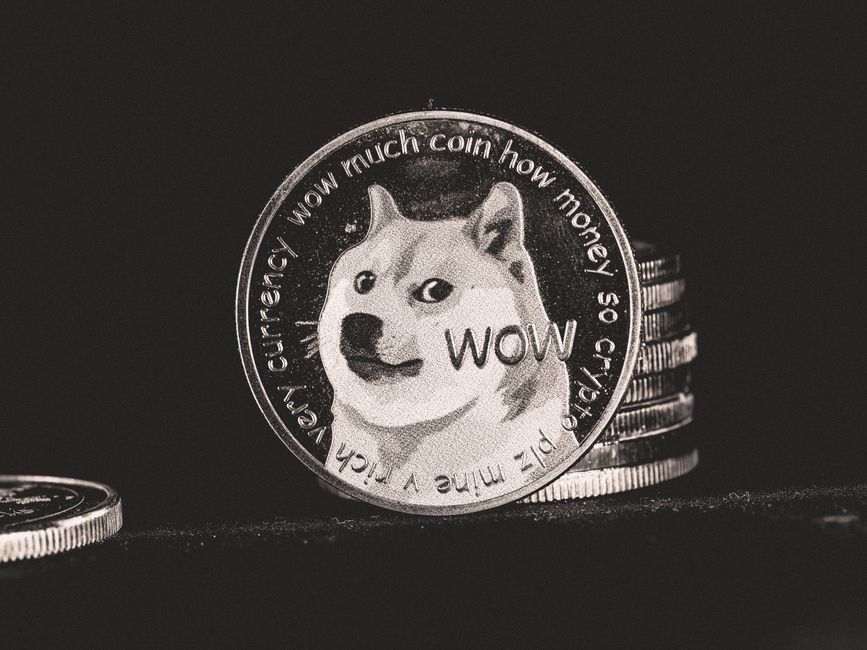
Dogecoin, launched in December 2013 by programmers Jackson Palmer and Billy Markus, marked the genesis of the meme coin phenomenon. The coin featured the Shiba Inu dog from the “doge” internet meme as its mascot. Despite being explicitly created as a lighthearted alternative to Bitcoin’s seriousness, Dogecoin developed a passionate community and achieved mainstream recognition.
From Niche to Mainstream (2014-2020)
For nearly seven years, Dogecoin remained largely a curiosity within cryptocurrency circles. Community members used it for tipping content creators on social media and charitable donations. The coin maintained a relatively stable but modest valuation, hovering between $0.001 and $0.05 for most of this period.
The Explosion Phase (2021-2026)
Beginning in late 2020 and accelerating dramatically in 2021, meme coins experienced exponential growth. Dogecoin reached an all-time high of approximately $0.74 in May 2021, driven partly by celebrity endorsements and retail investor enthusiasm. This success sparked a wave of new meme coin launches, with hundreds created in hopes of replicating Dogecoin’s trajectory.
The market matured significantly between 2021 and 2026, with early speculators achieving substantial returns while later entrants often faced significant losses. By 2026, meme coins had established themselves as a persistent—if unpredictable—segment of the cryptocurrency ecosystem.
Why People Still Buy Meme Coins in 2026
Potential for Exponential Returns
The primary attraction remains straightforward: the possibility of transformative financial gains from a modest initial investment. An investor who allocated $100 to Dogecoin in early 2020 would have owned approximately 200,000 coins at an average price of $0.0005. When Dogecoin peaked near $0.74 in 2021, that $100 initial investment would have been worth roughly $148,000.
While such outcomes are statistically rare and often cited selectively, they powerfully illustrate why people continue purchasing meme coins despite their speculative nature. In markets characterized by historically low interest rates and stock market volatility, meme coins offer the psychological appeal of unlimited upside potential for retail investors with limited capital.
Community and Belonging
Meme coin communities function as more than mere investor groups—they operate as subcultures with shared values, humor, and camaraderie. Investors often describe their participation as part of a movement rather than a purely financial transaction. Discord servers, Reddit forums, and Twitter/X communities dedicated to specific meme coins attract hundreds of thousands of participants who engage daily with content, discussions, and entertainment.
This social dimension provides psychological benefits distinct from financial returns. Members feel part of an insider group, often using specialized terminology and inside jokes that reinforce community bonds. For many participants, the social experience justifies continued engagement regardless of financial outcomes.
FOMO (Fear of Missing Out)
The fear of missing exponential rallies drives continuous buying pressure. When a meme coin surges 100% or 500% in a matter of days or weeks—a common occurrence—observers who didn’t participate experience regret. This emotional response encourages them to join the next perceived opportunity, creating cycles of buying momentum.
Social media amplifies this effect dramatically. Success stories circulate widely while losses remain private. Viral posts about early investors who “became millionaires” from meme coin investments reach millions of people, disproportionately influencing perception of risk-reward ratios.
Accessibility and Low Entry Barriers
Meme coins typically trade at fractions of a cent, allowing investors to purchase millions of tokens for modest amounts. This contrasts sharply with Bitcoin trading around $40,000-$60,000 per coin (as of 2026 estimates). Psychologically, buying one million coins of something feels more achievable than fractional Bitcoin ownership for many retail participants.
Additionally, launching a meme coin requires minimal technical expertise or capital compared to traditional business ventures. Numerous free tools and smart contract templates enable anyone to create a token in hours. This democratization of token creation maintains a constant supply of new meme coins for investors to explore.
Celebrity and Influencer Endorsements
High-profile individuals have repeatedly influenced meme coin adoption. Elon Musk’s tweets about Dogecoin and Shiba Inu sent their prices soaring multiple times between 2021 and 2025. Other celebrities, athletes, and social media personalities have promoted various meme coins, driving mainstream attention and retail buying pressure.
While SEC regulations increased scrutiny of celebrity endorsements by 2026, influencer promotion remained a significant driver of meme coin awareness and adoption among younger investors.
The Psychology Behind Meme Coin Investment
Gamification Appeal
Meme coin investing appeals to participants who view it as a form of gambling or gaming rather than traditional investing. The lottery-like risk-reward profile, rapid price movements, and community excitement create dopamine-driven engagement similar to video games or sports betting.
This reframing as entertainment rather than “serious investing” psychologically justifies risk-taking behavior that would otherwise seem irresponsible. Participants report that they’re not investing their savings but rather allocating “fun money” they can afford to lose—though actual outcomes frequently differ from stated intentions.
Narrative and Storytelling
Every successful meme coin develops a compelling narrative. Dogecoin has the underdog story of a joke coin with genuine utility and community. Shiba Inu positions itself as the “Dogecoin killer.” Newer projects craft stories about revolutionary technology, sustainable models, or cultural significance.
Human brains are inherently narrative-driven. We process information and make decisions through stories rather than pure data. Meme coins excel at creating memorable narratives that resonate emotionally, making them more psychologically compelling than technical explanations of utility or fundamentals.
Status and Identity
Early adopters of successful meme coins acquire bragging rights and elevated status within their communities. Owning billions of tokens before the price increased significantly becomes a badge of honor. This identity component keeps investors engaged even during periods of price stagnation or decline.
How Meme Coins Work
Technical Basics
Meme coins are typically ERC-20 tokens on Ethereum, SPL tokens on Solana, or BEP-20 tokens on Binance Smart Chain. They’re created through smart contracts—self-executing code that defines the token’s properties, supply limits, and transaction rules.
Most meme coins have maximum supply caps, preventing infinite creation. Early versions often had no cap, allowing founders to mint unlimited tokens. This practice led to inflation and price collapse in many projects, prompting newer meme coins to implement hard caps as a trust signal.
Tokenomics and Distribution
Tokenomics refers to the economic design of a token, including supply mechanics, distribution methods, and incentive structures. Many meme coins employ the following mechanisms:
- Liquidity pools: Token creators deposit initial liquidity with stablecoins on decentralized exchanges, allowing trading without a traditional order book
- Burn mechanisms: Percentage of transactions are permanently removed from circulation, theoretically reducing supply and supporting price appreciation
- Staking rewards: Token holders earn additional tokens for locking up their holdings, incentivizing long-term retention
- Community pools: Portions of tokens are reserved for community airdrops or rewards
Trading and Volatility
Meme coins trade 24/7 on decentralized exchanges without regulatory oversight or trading halts. This constant availability enables rapid price discovery but also exposes investors to extreme volatility. Price swings of 50% to 200% within single days are common.
Trading occurs primarily through automated market makers (AMMs) that use mathematical formulas to determine prices based on available liquidity. When buying pressure exceeds selling pressure, prices spike dramatically. Conversely, when holders panic-sell, prices can collapse equally rapidly.
Meme Coins vs. Traditional Cryptocurrencies: A Comparison
| Factor | Meme Coins | Bitcoin/Ethereum |
|---|---|---|
| Primary Purpose | Entertainment and speculation | Financial infrastructure and transactions |
| Underlying Technology | Minimal innovation; uses existing chains | Novel consensus mechanisms and scaling solutions |
| Volatility | Extreme (often 50-300% swings) | High but more stable (typically 10-30% daily) |
| Adoption Rate | Driven by hype and sentiment | Driven by institutional adoption and utility |
| Real-World Use Cases | Tipping, charity donations (limited) | Payments, smart contracts, DeFi infrastructure |
| Developer Activity | Often dormant post-launch | Continuous protocol improvements and updates |
| Regulatory Risk | High; uncertain legal status | Moderate; clearer regulatory frameworks emerging |
| Time Horizon | Days to months for typical holding periods | Months to years for most investors |
Risks and Serious Considerations
Total Loss Risk
The most critical risk in meme coin investing is the realistic possibility of losing the entire investment. Unlike established cryptocurrencies with network effects and adoption, meme coins can lose community support and become worthless essentially overnight. Thousands of meme coins launched between 2020 and 2026 have collapsed to near-zero valuations.
Many investors have experienced the psychological and financial trauma of watching their portfolio decline 90%, 95%, or 100%. These losses, while real and painful, rarely receive the same media attention as success stories.
Rug Pulls and Scams
A “rug pull” occurs when token creators or major holders suddenly sell their entire holdings, causing price collapse. The term originates from the phrase “pulling out the rug”—abruptly removing liquidity that supports the price. Early meme coins frequently fell victim to rug pulls, where creators launched projects with no intention of maintaining them.
While community awareness and better smart contract practices reduced rug pulls by 2026, they remained common in newly launched tokens. Investors entering a meme coin at launch face significant risk of deliberate abandonment by creators.
Extreme Volatility and Timing Risk
Meme coin price movements often follow exponential patterns: slow accumulation, explosive growth, euphoric peak, and rapid collapse. Timing entries and exits perfectly is nearly impossible. Most investors either:
- Buy near peaks during maximum hype and experience severe losses
- Hold through collapses, hoping for recovery that never materializes
- Panic-sell during temporary dips, locking in losses unnecessarily
Lack of Fundamental Value
Meme coins typically provide no utility beyond being tradeable. They don’t generate cash flows, provide ownership in productive assets, or offer governance participation. Valuation depends entirely on whether future buyers will pay higher prices than current ones—a greater-fool dynamic.
Without fundamental anchors, meme coins are vulnerable to sudden sentiment shifts that render previous valuations completely disconnected from reality.
Regulatory Uncertainty
By 2026, regulatory frameworks for cryptocurrencies remained fluid globally. Potential regulations targeting meme coins specifically, or stricter cryptocurrency oversight generally, could dramatically impact valuations. Several jurisdictions considered implementing or had implemented restrictions on unregistered token offerings, creating additional risk.
Market Manipulation
Decentralized exchanges lack the market surveillance and circuit breakers found in traditional financial markets. Meme coin trading is susceptible to manipulation through coordinated buying/selling (pump-and-dump schemes), false information dissemination, and artificial volume creation. While regulations evolved to address these practices, enforcement remained challenging.
Psychological Biases
Meme coin investing frequently triggers cognitive biases that impair decision-making:
- Confirmation bias: Seeking information supporting your position while dismissing warnings
- Sunk-cost fallacy: Holding losses hoping to recover money already invested
- Overconfidence: Believing you can time market movements better than others
- Recency bias: Overweighting recent price gains as predictive of future performance
Frequently Asked Questions
Q: Can meme coins realistically make people rich?
A: Statistically, yes, but the odds are extremely unfavorable. Early investors in Dogecoin and Shiba