- Table of Contents
- Key Takeaways
- Introduction
- What is a Copilot AI?
- Characteristics of Copilot AI
- Real-World Examples
- Understanding Autopilot AI
- Characteristics of Autopilot AI
- Current Applications
- Key Differences Between Copilot and Autopilot
- Control and Decision-Making
- Speed and Efficiency
- Scalability
- Risk Management
- User Expertise Required
- The Agentic AI Revolution
- What Makes AI Agentic?
- The Agentic Shift
- Real-World Applications
- Business Process Automation
- Research and Analysis
- Software Development
- Customer Support
- Data Analysis and Insights
- Challenges and Considerations
- Safety and Alignment
- Accountability and Liability
- Security Risks
- Transparency and Explainability
- Cost and Implementation
- Future Outlook
- Short Term (1-2 Years)
- Medium Term (3-5 Years)
- Long Term (5+ Years)
- Frequently Asked Questions
- Q1: Is Agentic AI the same as Artificial General Intelligence (AGI)?
- Q2: How do agentic AI systems know when to ask for human help?
- Q3: Could agentic AI put people out of work?
- Q4: What's the biggest barrier to wider adoption of agentic AI?
“`html
Table of Contents
Key Takeaways
- Copilot AI requires human oversight and decision-making at every step
- Autopilot AI operates autonomously with minimal human intervention
- Agentic AI represents the evolution toward fully autonomous AI systems that can plan, execute, and adapt
- The shift from copilot to autopilot is driven by advances in machine learning, reasoning, and multi-step task execution
- Businesses must address safety, security, and ethical concerns before deploying autonomous AI agents
Introduction
Artificial intelligence has become an integral part of modern business operations, but the way we interact with AI is fundamentally changing. For years, we’ve relied on AI as a copilot—a tool that assists us while we maintain control. Today, we’re witnessing a dramatic shift toward autopilot AI, where systems operate with increasing autonomy, making decisions and taking actions with minimal human intervention.
This transition represents one of the most significant developments in AI evolution, introducing us to the concept of agentic AI. Rather than simply responding to queries or completing single tasks, agentic AI systems can understand complex objectives, break them down into manageable steps, and execute them independently—much like how a human agent would handle a project from start to finish.
Understanding this shift is crucial for anyone working with or planning to implement AI systems. The move from copilot to autopilot has profound implications for productivity, decision-making, and organizational strategy. In this comprehensive guide, we’ll explore what these terms mean, how they differ, and what the agentic AI revolution means for the future.
What is a Copilot AI?
A copilot AI is an artificial intelligence system designed to assist humans in completing tasks, but with the human maintaining ultimate control and decision-making authority. The name itself captures the essence: just as a copilot in an aircraft assists the pilot but the pilot remains in command, a copilot AI provides suggestions, recommendations, and support while humans drive the decision-making process.
Characteristics of Copilot AI
- Human-in-the-loop: Every significant decision requires human approval or intervention
- Responsive: The AI reacts to human queries and commands rather than acting independently
- Transparent: Users can easily understand why the AI made specific suggestions
- Limited scope: Typically designed for specific tasks or narrow domains
- Safety-first: Built with guardrails that prevent autonomous action
Real-World Examples
Common examples of copilot AI include:
- GitHub Copilot: Suggests code completions but developers must review and accept each suggestion
- ChatGPT: Generates responses to user prompts but cannot take actions on its own
- Email drafting assistants: Propose email responses that humans review before sending
- Design tools: AI that suggests layouts or design elements for human creators to evaluate
The copilot model has proven incredibly valuable because it combines AI’s computational power with human judgment, creativity, and contextual understanding. However, it also has inherent limitations—primarily that every action requires human involvement, which can slow down processes and limit scalability.
Understanding Autopilot AI
Autopilot AI represents a significant leap forward in autonomy. These systems can execute tasks, make decisions, and take actions with minimal or no human intervention. Like the autopilot feature in modern aircraft, which can manage flight operations for extended periods, autopilot AI systems handle complex processes independently while humans monitor progress.
Characteristics of Autopilot AI
- Autonomous operation: Systems execute tasks without waiting for human approval at each step
- Goal-oriented: Given an objective, the AI works toward completing it
- Adaptive: Can adjust its approach based on changing conditions or obstacles
- Monitoring-based: Humans observe and intervene only if something goes wrong
- Scalable: Can handle multiple tasks simultaneously across different domains
Current Applications
Autopilot AI is already operating in various sectors:
- Manufacturing: Robotic systems that manage production lines with minimal human oversight
- Trading: Algorithmic trading systems that execute investment decisions autonomously
- Cloud infrastructure: AI systems that automatically optimize server allocation and resource management
- Customer service: Advanced chatbots that resolve issues without human agent involvement
Key Differences Between Copilot and Autopilot
While both copilot and autopilot AI aim to enhance human capability, they operate on fundamentally different principles:
Control and Decision-Making
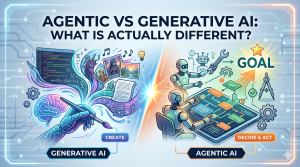
Copilot AI places humans firmly in control. The AI suggests, but humans decide. Autopilot AI transfers decision-making authority to the system itself. Humans set parameters and objectives, but the AI determines how to achieve them.
Speed and Efficiency
Copilot systems are constrained by the human review cycle. Even if the AI could work faster, it must wait for human approval. Autopilot systems operate at machine speed, processing information and executing decisions in seconds or milliseconds.
Scalability
Copilot AI requires human resources proportional to the volume of work. If you double your workload, you need more human reviewers. Autopilot AI can scale without proportional human involvement—one AI system can manage vastly larger workloads.
Risk Management
Copilot AI inherently manages risk through human oversight. Autopilot AI requires robust safety mechanisms, validation systems, and fallback protocols built directly into the AI.
User Expertise Required
Copilot AI assumes users have domain expertise and can evaluate suggestions. Autopilot AI must work for users with varying levels of expertise since they’re not reviewing every decision.
The Agentic AI Revolution
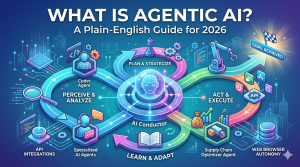
Agentic AI is the natural evolution of autopilot systems—it represents AI that acts as an autonomous agent, capable of pursuing complex objectives with minimal human guidance. Think of an agent as an AI employee who understands your goals and independently figures out how to accomplish them.
What Makes AI Agentic?
- Multi-step reasoning: Can break down complex problems into sequential steps
- Tool use: Can employ various tools and systems to accomplish objectives (APIs, databases, software applications)
- Self-correction: Can evaluate its own actions, identify mistakes, and adjust course
- Long-horizon planning: Can work toward goals that require multiple sequential actions over extended periods
- Contextual learning: Can understand organizational context and adapt behavior accordingly
The Agentic Shift
The move toward agentic AI is being driven by several technological breakthroughs:
- Advanced reasoning models: Modern large language models can engage in complex logical reasoning and planning
- Function calling: AI can now call external APIs and tools to interact with real systems
- Memory systems: Agentic AI can maintain context and learn from past interactions
- Improved reliability: Better error-handling and validation mechanisms reduce harmful outputs
- Integration frameworks: Easier connections between AI systems and enterprise software
Real-World Applications
Business Process Automation
Agentic AI is transforming how companies handle routine business processes. Rather than having employees manually handle expense reports, customer onboarding, or data entry, autonomous agents can manage these workflows completely. An agent could receive a customer inquiry, gather necessary information, check inventory, process an order, and send confirmation—all without human intervention.
Research and Analysis
Agentic AI can conduct research by searching multiple sources, synthesizing information, identifying gaps, and presenting comprehensive findings. This is particularly valuable in competitive intelligence, market research, and academic investigation where the work involves multiple steps and source validation.
Software Development
AI agents are beginning to handle complex software development tasks. An agent can receive a feature request, design the architecture, write code, run tests, identify failures, debug issues, and deploy the solution—significantly accelerating development cycles.
Customer Support
Advanced agentic AI in customer support can handle complex multi-step issues. Instead of escalating to human agents, an AI agent can troubleshoot problems, check account history, process refunds, and follow up on resolutions autonomously.
Data Analysis and Insights
Rather than analysts manually querying databases and building reports, agentic AI can autonomously explore datasets, identify patterns, generate hypotheses, validate findings, and create comprehensive analytical reports.
Challenges and Considerations
Safety and Alignment
The greater the autonomy, the greater the potential for unintended consequences. A system that can access company systems and take actions must be carefully aligned with organizational values and constraints. What happens if an agent makes a decision that seems logical within its parameters but creates problems in the real world?
Accountability and Liability
When a copilot AI makes a bad suggestion, a human rejected it. When an autopilot or agentic AI makes a bad decision, who bears responsibility? This legal and ethical question remains unsettled in many jurisdictions and industries.
Security Risks
Autonomous systems that can take actions across multiple platforms and systems create new security attack surfaces. If an AI agent can access your CRM and databases to fulfill its objectives, compromising that agent could compromise your entire system.
Transparency and Explainability
As AI systems become more autonomous, it becomes harder to explain why they made specific decisions. This is problematic in regulated industries, healthcare, and financial services where explainability is legally required.
Cost and Implementation
While agentic AI promises efficiency gains, implementing these systems requires significant investment in infrastructure, integration, testing, and validation. Organizations must carefully evaluate ROI before widespread deployment.
Future Outlook
The transition from copilot to autopilot to agentic AI isn’t a distant possibility—it’s happening now. However, the pace of adoption will vary significantly across industries and organizations based on their specific needs, risk tolerance, and regulatory environment.
Short Term (1-2 Years)
Expect to see agentic AI primarily used for routine, well-defined business processes with clear success metrics. Organizations will carefully monitor these deployments and maintain human oversight as systems prove their reliability. The focus will be on back-office operations and internal processes rather than customer-facing applications.
Medium Term (3-5 Years)
More complex processes will be automated as agentic AI systems become more sophisticated and proven. We’ll see increased adoption across industries, with companies building competitive advantages through effective AI agent deployment. Regulatory frameworks will begin to solidify, providing clearer guidelines for autonomous AI use.
Long Term (5+ Years)
Agentic AI will become embedded in organizational operations across virtually all industries. The question will shift from “Should we use agentic AI?” to “How can we use it most effectively?” Organizations that successfully integrate agentic AI will have significant competitive advantages in speed, scalability, and cost efficiency.
However, this future also depends on solving the safety, alignment, security, and regulatory challenges discussed above. The most successful organizations will be those that develop robust frameworks for deploying agentic AI responsibly.
Frequently Asked Questions
Q1: Is Agentic AI the same as Artificial General Intelligence (AGI)?
A: No, these are related but distinct concepts. Agentic AI refers to systems that can autonomously plan and execute multi-step tasks within defined domains. AGI would be AI with human-level intelligence across all domains. You can have agentic AI without AGI—specialized agents that are excellent at specific tasks but don’t have general intelligence. Most current agentic AI systems are far from AGI-level capabilities.
Q2: How do agentic AI systems know when to ask for human help?
A: Well-designed agentic AI systems include mechanisms to identify situations beyond their capability or confidence level and escalate to human operators. This might involve uncertainty thresholds (if confidence falls below X%, ask for help), situation detection (if an unexpected event occurs, ask for help), or specific domain rules. Organizations implementing agentic AI must carefully design these escalation protocols to maintain safety and human oversight where needed.
Q3: Could agentic AI put people out of work?
A: Agentic AI will certainly displace certain types of work, particularly routine, repetitive tasks. However, historical patterns suggest that automation also creates new types of work—managing AI systems, handling edge cases, conducting analysis of AI-generated insights, and addressing failures. The transition period will be challenging for workers in affected roles, which is why reskilling and education initiatives are important. Rather than eliminating work entirely, agentic AI is more likely to shift the nature of work toward higher-value, more creative, and more strategic tasks.
Q4: What’s the biggest barrier to wider adoption of agentic AI?
A: There isn’t a single barrier—it’s a combination of factors. Technical challenges remain in reliability and reasoning, but the bigger obstacles are organizational and regulatory. Many organizations lack the infrastructure and expertise to