- Table of Contents
- Key Takeaways
- Introduction
- What is Fundamental Analysis in Forex?
- The Supply and Demand Principle
- Key Economic Indicators That Move Currencies
- GDP, Inflation, and Employment Data
- Gross Domestic Product (GDP)
- Inflation Data (CPI and PPI)
- Employment Data
- Interest Rates and Central Bank Policy
- The Interest Rate Differential
- Forward Guidance and Policy Signals
- Trade Balance and Current Account Data
- How Economic Data Releases Impact Currency Markets
- The Expectation versus Reality Dynamic
- Market Volatility During Data Releases
- Delayed Market Reaction
- Risks and Considerations
- Unpredictability of Market Reactions
- Geopolitical and Sentiment Shifts
- Time Horizons Matter
- Leverage and Risk Management
- Correlation and Causation
- Frequently Asked Questions
- Q: How far in advance can I predict currency movements using fundamental analysis?
- Q: Should I use fundamental analysis or technical analysis?
- Q: Which economic indicator is most important for forex trading?
- Q: Can I make consistent profits trading economic data releases?
- Author Bio
Disclaimer: This article is for educational purposes only and does not constitute financial advice, investment recommendations, or an offer to buy or sell any financial instruments. Forex trading carries substantial risk of loss. Past performance does not guarantee future results. Always conduct your own research and consult with a qualified financial advisor before making trading decisions. The examples and data presented are illustrative and subject to change.
Key Takeaways
- Fundamental analysis examines economic data, central bank policies, and macroeconomic conditions to predict currency movements
- Major economic indicators include GDP, inflation rates, employment figures, interest rates, and trade balances
- Central bank decisions on monetary policy have profound effects on currency strength and volatility
- Economic data releases are scheduled events that often trigger significant short-term price movements in forex markets
- Combining fundamental analysis with technical analysis and risk management provides a more comprehensive trading approach
- Market expectations versus actual data results can create trading opportunities or losses
- Economic calendars help traders anticipate major data releases and prepare trading strategies accordingly
Introduction
The foreign exchange market is the world’s largest and most liquid financial market, with daily trading volumes exceeding $6 trillion. Unlike stock markets that react to company-specific news, the forex market responds primarily to macroeconomic data and policy decisions that affect entire nations’ economies. Understanding how economic fundamentals drive currency movements is essential for anyone serious about forex trading.
Fundamental analysis in forex involves examining economic indicators, government policies, geopolitical events, and broader macroeconomic trends to understand why currencies strengthen or weaken. While technical analysis focuses on price charts and patterns, fundamental analysis looks at the “why” behind those movements. The reality is that strong economic data makes a currency more attractive to international investors and traders, driving demand and appreciation.
This comprehensive guide explores how economic data moves currencies, which indicators matter most, and how to incorporate fundamental analysis into your trading approach.
What is Fundamental Analysis in Forex?
Fundamental analysis in forex is the study of economic, financial, and geopolitical factors that influence currency values. The core principle is straightforward: currencies represent the economic health and investment attractiveness of their respective countries. A strong economy with positive growth, low inflation, and stable politics attracts foreign investment, increasing demand for that country’s currency.
Forex fundamental analysis differs from equity fundamental analysis in important ways. When analyzing a stock, you examine a single company’s financial statements, competitive position, and management. When analyzing currencies, you’re examining entire national economies—their growth rates, inflation trends, employment levels, and policy frameworks.
The Supply and Demand Principle
At its core, currency values follow basic supply and demand principles. When international investors want to invest in U.S. stocks or bonds, they need U.S. dollars, increasing demand for the currency. When a country’s economic outlook weakens, foreign investors reduce their holdings, decreasing demand. This shift in demand directly impacts exchange rates.
Consider this illustrative example: If the United States releases stronger-than-expected economic growth data, foreign investors may increase their purchases of U.S. Treasury bonds and stocks. They need dollars to make these investments, creating additional demand for USD. If this demand increase outpaces the supply of dollars in the market, the USD appreciates against other currencies like the EUR or GBP.
Key Economic Indicators That Move Currencies
Not all economic data carries equal weight in forex markets. Some indicators have proven historically to move currencies significantly, while others have minimal impact. Professional traders focus their attention on the indicators that have demonstrated market-moving power.
| Indicator | Release Frequency | Market Impact | What It Measures |
|---|---|---|---|
| Non-Farm Payroll (NFP) | Monthly (first Friday) | Very High | U.S. employment changes excluding agriculture |
| GDP (Gross Domestic Product) | Quarterly | Very High | Total economic output and growth rate |
| CPI (Consumer Price Index) | Monthly | Very High | Inflation rate and price changes |
| Central Bank Rate Decision | Variable (6-8 weeks) | Very High | Official interest rate changes |
| Trade Balance | Monthly | High | Exports minus imports |
| Consumer Confidence | Monthly | Medium | Consumer spending sentiment |
| Retail Sales | Monthly | Medium-High | Consumer spending activity |
| Manufacturing PMI | Monthly | Medium | Manufacturing sector health |
Successful forex traders maintain economic calendars and track these indicators religiously. Many brokers provide free economic calendars that show upcoming releases, previous values, forecast values, and actual results.
GDP, Inflation, and Employment Data
Gross Domestic Product (GDP)
GDP represents the total monetary value of all finished goods and services produced within a country during a specific period. It’s the broadest measure of economic health. GDP growth is typically released quarterly in preliminary, second, and final estimates.
For illustrative purposes, consider that if the U.S. GDP growth comes in at 3.2% annually when economists expected 2.5%, this stronger-than-expected performance suggests robust economic activity. Such a result typically strengthens the USD because it indicates a healthier investment environment and potentially higher future interest rates as central banks respond to stronger growth.
Conversely, if GDP disappoints expectations, showing slower growth or contraction, the currency typically weakens as investors reduce their exposure to that economy.
Inflation Data (CPI and PPI)
The Consumer Price Index (CPI) measures price changes in a basket of consumer goods and services. Central banks target specific inflation rates, typically around 2% annually for developed economies. Inflation data directly influences monetary policy decisions.
When inflation runs higher than central bank targets—say, reaching 4-5% annually—central banks typically respond by raising interest rates to cool down the economy. Higher interest rates make that country’s bonds and savings accounts more attractive to foreign investors, increasing currency demand. This is why stronger-than-expected inflation data can paradoxically strengthen a currency in the short term, as markets anticipate rate hikes.
However, sustained high inflation (above 5-6%) can eventually weaken a currency if it signals economic instability or loss of central bank credibility. The relationship between inflation and currency strength is complex and context-dependent.
Employment Data
Employment figures indicate labor market health and economic momentum. The U.S. Non-Farm Payroll (NFP) release on the first Friday of each month is among the most anticipated economic data points globally. When the U.S. economy added 300,000 jobs in a month, this typically indicates strong economic growth. When job creation slows to 50,000 monthly, it signals economic weakness.
The unemployment rate and labor force participation also matter significantly. A declining unemployment rate combined with rising wages suggests tight labor markets and potential wage-driven inflation, which influences central bank policy.
Interest Rates and Central Bank Policy
Interest rates are perhaps the single most important fundamental driver of currency values. Higher interest rates make a country’s bonds and bank deposits more attractive, increasing demand for that currency from yield-seeking investors.
The Interest Rate Differential
Forex traders often consider interest rate differentials between currency pairs. If the U.S. Federal Reserve maintains rates at 5.25-5.50% while the European Central Bank keeps rates at 4.25%, the interest rate differential of approximately 1% favors USD. Investors can earn higher returns in dollar-denominated assets, increasing USD demand.
This is why currency traders obsessively monitor central bank meetings and policy announcements. When the Federal Reserve signals plans to raise rates, USD typically strengthens. When central banks signal lower rates ahead, their currency typically weakens.
Forward Guidance and Policy Signals
Modern central banks provide “forward guidance,” communicating their likely future policy stance. This matters as much as current rate decisions because currency markets are forward-looking. If the Federal Reserve indicates rates will stay higher for longer than markets expected, USD often strengthens immediately on the announcement, even if they don’t change rates that day.
The European Central Bank, Bank of England, Bank of Japan, and Reserve Bank of Australia all have regular monetary policy meetings that move forex markets significantly. Traders learn to anticipate these meetings and prepare for potential volatility.
Trade Balance and Current Account Data
Trade balance data shows the difference between a country’s exports and imports. A trade surplus (exports exceed imports) provides positive fundamental support for a currency, as foreign buyers must purchase the home currency to pay for exports.
Countries with large trade deficits face fundamental currency headwinds. For example, the United States has run persistent trade deficits for decades, meaning Americans import more goods than they export. This creates structural demand for foreign currencies to pay for imports, providing long-term downward pressure on the USD in theory. However, this is often offset by strong capital inflows from foreign investors seeking U.S. assets, demonstrating how multiple fundamentals interact.
The current account, a broader measure that includes trade plus investment income and transfers, provides additional context. Countries with current account deficits need foreign capital inflows to finance those deficits, making them vulnerable to sudden capital outflows if sentiment shifts.
How Economic Data Releases Impact Currency Markets
The Expectation versus Reality Dynamic
Here’s a crucial insight: currency markets react not to absolute economic data but to the difference between expectations and actual results. If economists forecast 2.5% GDP growth and the actual figure comes in at 2.5%, the currency likely won’t move much because the result matched expectations. However, if actual growth reaches 3.5%, the positive surprise typically strengthens the currency.
This is why the “consensus forecast” matters tremendously. Professional traders compare actual data against consensus economist forecasts. Positive surprises support currencies; negative surprises weaken them.
Market Volatility During Data Releases
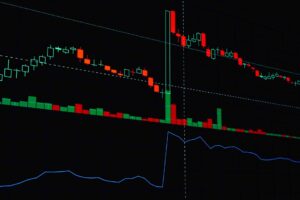
The moments immediately following major economic data releases often show the largest price moves in forex markets. The EUR/USD pair might move 50-150 pips in seconds after a major U.S. economic release. This volatility creates both opportunities and risks.
Many traders deliberately trade these data releases, attempting to profit from directional moves they anticipate. Others avoid trading during high-impact releases due to the unpredictable volatility and slippage (the difference between expected and actual execution prices). Both approaches have merit depending on individual risk tolerance and trading style.
Delayed Market Reaction
Occasionally, markets don’t immediately react to economic data, instead digesting the information over hours or days. This delayed reaction occurs when data is mixed or when multiple conflicting signals emerge. Professional traders monitor not just initial reactions but sustained trends following releases.
Risks and Considerations
While fundamental analysis provides valuable insights into currency direction, traders must understand its limitations and associated risks.
Unpredictability of Market Reactions
Economic data sometimes moves markets in unexpected directions. This occurs when market participants have already priced in expectations that differ from consensus forecasts. For example, strong employment data might weaken a currency if traders interpret it as delaying potential interest rate cuts they were anticipating.
Geopolitical and Sentiment Shifts
Fundamental analysis focuses on economic data, but forex markets also react dramatically to geopolitical events, central bank communications, and sentiment shifts. A surprise election result, military conflict, or policy announcement can move currencies more than economic data, sometimes creating fundamental reversals.
Time Horizons Matter
Fundamental analysis works better for longer-term currency trends (weeks to months) than for short-term trading. Day traders and scalpers typically rely more on technical analysis and market microstructure. Fundamental analysis shines when analyzing which currencies should appreciate or depreciate over 3-12 month periods.
Leverage and Risk Management
Forex trading often involves leverage, meaning traders can control positions many times larger than their account size. While this amplifies gains, it also amplifies losses catastrophically. Even the best fundamental analysis cannot protect against excessive leverage and poor risk management. Position sizing, stop losses, and maximum acceptable risk per trade are essential.
Correlation and Causation
Sometimes economic data correlates with currency movements by coincidence rather than causation. Traders must maintain analytical discipline, avoiding false interpretations of random correlations.
Frequently Asked Questions
Q: How far in advance can I predict currency movements using fundamental analysis?
A: Fundamental analysis is most reliable for medium to long-term predictions (3-12 months), not short-term movements. You can often anticipate which currency should strengthen or weaken based on economic trends and policy direction, but predicting exact timing and magnitude is difficult. Markets sometimes front-run anticipated economic changes months in advance, and unexpected geopolitical events can reverse fundamental trends instantly.
Q: Should I use fundamental analysis or technical analysis?
A: The most effective approach combines both. Fundamental analysis helps you understand the longer-term direction and identify which currency pairs have favorable risk-reward setups. Technical analysis helps you identify optimal entry points, support and resistance levels, and timing. Using fundamentals without technicals can lead to being right about direction but wrong about timing. Using technicals without fundamentals can mean trading against fundamental trends.
Q: Which economic indicator is most important for forex trading?
A: There’s no single most important indicator—importance varies by currency pair and market conditions. However, central bank interest rate decisions consistently rank among the most impactful releases. GDP and employment data for major economies also move markets dramatically. Following an economic calendar and tracking which releases move your specific currency pairs is more useful than assuming certain indicators always matter most.
Q: Can I make consistent profits trading economic data releases?
A: Some professional traders specialize in data release trading and achieve consistent results through disciplined approaches, careful analysis of expectations versus forecasts, and strict risk management. However, the unpredictability of market reactions and execution challenges (slippage, gapping) make data release trading high-risk. Most successful traders use data releases to understand longer-term trends rather than betting on specific directional moves.
Author Bio
This article was written by a financial content specialist with extensive experience in forex markets and